Help Us Make This A Reality
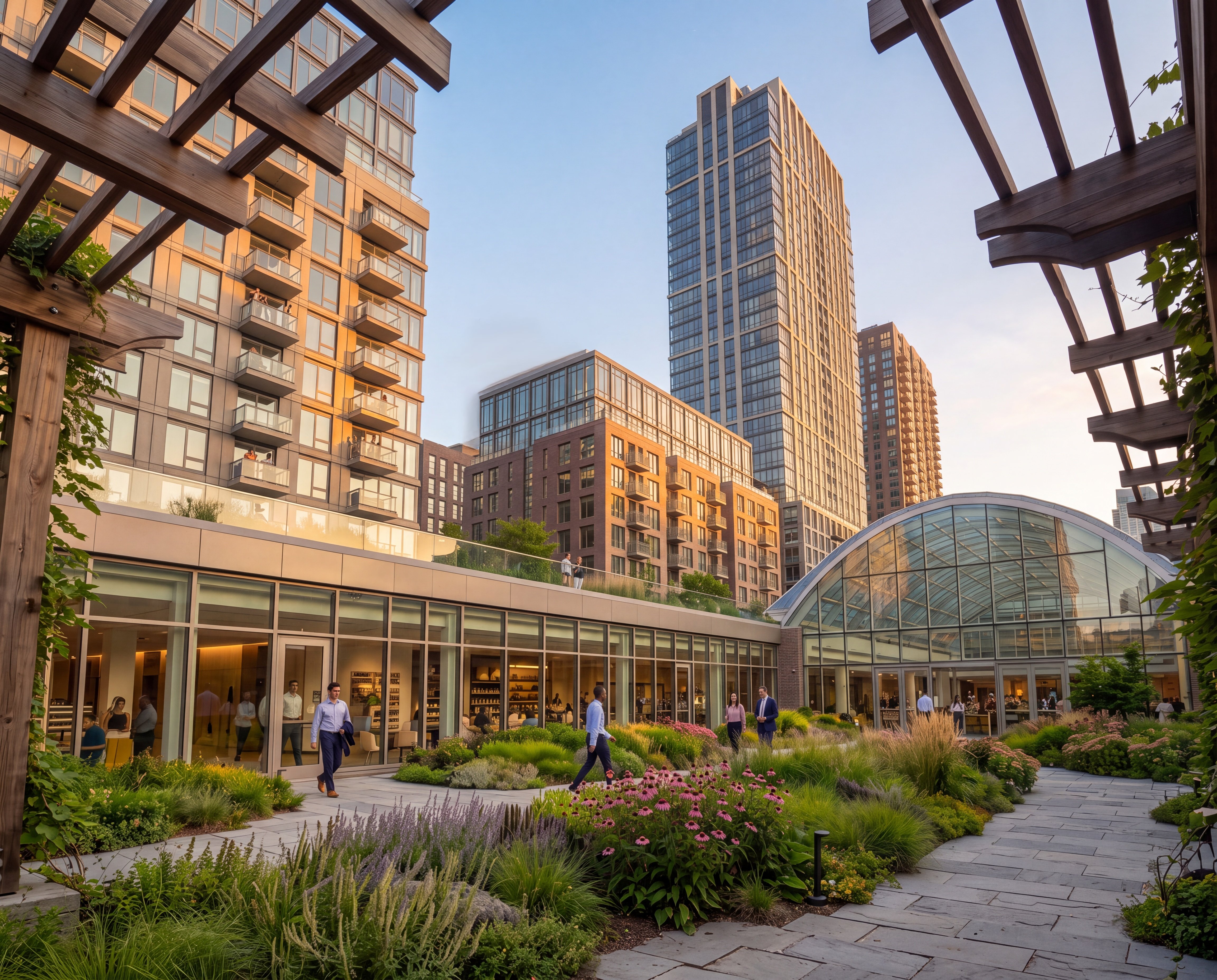
Concept visualization — retained-core variant by Sarif Consulting.
The surrounding parcels are how the civic infrastructure stays.
The approved plan already puts homes, shops, and workplaces on the parcels around the core. Lloyd Commons keeps that mix. The trust holds the core, so the rink and the indoor promenade are not cleared, with the surrounding parcels helping to finance the Lloyd Center renewal.
Portland’s housing study says to acquire and steward land and buildings. The report does not name this site. The Housing Bureau’s 2026 request for qualifications contemplates City ownership of land with a ground lease to a developer.
The core principles
Mixed-use parcels
Homes, shops, and workplaces on the same blocks. The street has a reason to be busy in the day and after dark. This is the plan the City already approved, not a request for a new one.
Social housing
A permanently affordable social housing share on some of those parcels, paid for by public partnership and by the value of the land around the core. The share is sized to funding that is actually secured. No number is promised before that.
The trust
Oregon law, recorded on the land, holds the core. The parcels around it can be leased, and some sold, to help pay for the purchase. A future board cannot sell the core. The capital memo holds the figures. Neither is gated. How This Works →
Why this site.
Already entitled
The master plan is approved. This proposal does not ask the City to reopen it. It does not require a rink or an indoor promenade.
On transit
MAX Blue and Red lines are at the door, in a convention and events district.
Large enough to matter
27.1 acres, with room for the homes the approved plan already allows.
Sites ready to build
The parcels around the core can be delivered ready for a builder. The parking comes down first.
Builders finance the homes
The purchase is for the land. The buildings are financed by the people who build them.
A cleared site would put years of construction in the middle of that district. Keeping the core gives people a reason to be there while the homes go up.
Who we most want to hear from.
Foundation officers
Program officers and trustees weighing a civic acquisition at district scale — past the overview, into the governance model and what it commits.
CDFIs and banks
Credit committees assessing mission-aligned facilities — past the capital memo, into structure, collateral logic, and conditions precedent.
Public agencies
City, county, Metro, and state staff — funding pathways and intergovernmental mechanics, and the boundary this project holds: a place in the commons, not power over it.
Prospective board members
Candidates for the three-constituency board — composition rules, fiduciary structure, and the supermajority architecture before any commitment.
Counsel
Nonprofit, securities, and real-estate counsel — the instrument stack, the Oregon statutory bases, and the questions already flagged for legal opinion.
The three documents behind this project.
The overview makes the case. The trust model explains how it holds. The capital plan shows the money working. Each points to the next, and all three are upfront about what we don’t yet know.
Start a conversation.
The documents are the briefing; this is the channel. No automated pipelines — requests are read and answered personally, usually within a few business days.